Xuan Yuan
Introduction
Xuan Yuan, also known as the Yellow Emperor, is a legendary sovereign in Chinese mythology and one of the most significant cultural figures in Chinese history. Revered as the founding ancestor of Chinese civilization, Xuan Yuan is credited with numerous innovations and developments that laid the foundation for Chinese society and culture. The figure of the Yellow Emperor holds a central place in Chinese folklore, historical narratives, and cultural practices, symbolizing unity and the root of the Han Chinese identity. As a mythical figure, Xuan Yuan's legacy transcends history and continues to influence modern Chinese culture and tradition.
Historical Context
The Yellow Emperor is considered one of the Five Emperors, mythical figures who are believed to have ruled China in ancient times, preceding the Xia Dynasty. Xuan Yuan's reign is traditionally dated to around the 27th century BC. He is depicted as the leader of the Huaxia tribal alliance, which is regarded as the cradle of the future Chinese nation. This period is associated with the transition from tribal to more centralized forms of governance, setting the stage for the development of Chinese civilization.
Under his rule, significant advancements were made in agriculture, production, and the development of clothing and headwear. The cultivation of crops and the promotion of sericulture (silk farming) are attributed to his leadership, marking substantial progress in economic and cultural practices. The Yellow Emperor is also credited with the initiation of many cultural and technological innovations, such as medicine, the compass, and writing, which are foundational to Chinese culture and history.
Cultural Significance
The Yellow Emperor holds immense cultural and symbolic significance in Chinese tradition. As a progenitor of Chinese civilization, he is seen as the common ancestor of all Chinese people, often referred to as "yanhuang zisun," meaning the descendants of the Yellow Emperor and Emperor Yan. His influence extends into various aspects of Chinese culture, including religion, festivals, and national identity.
Shangsi Festival, observed on the third day of the third lunar month, is a day believed to be the Yellow Emperor's birthday. Celebrated across China, this festival is associated with rituals to ward off evil and purify oneself, reflecting ancient practices linked to the Yellow Emperor's era. The festival's customs, such as sacrificial ceremonies and cleansing rituals, are deeply rooted in the traditions established during Xuan Yuan's time.
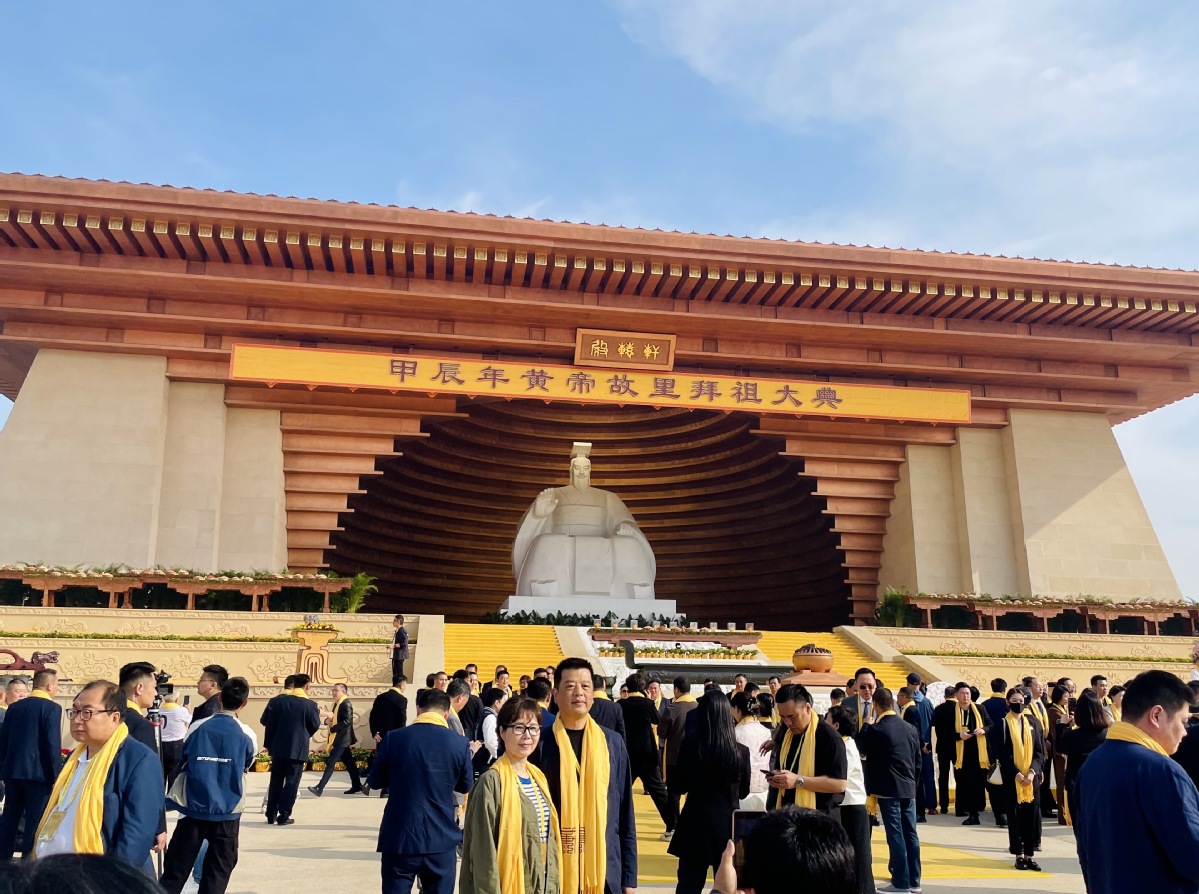
In modern China, the Yellow Emperor remains a powerful symbol of cultural heritage and unity. Annual ceremonies and festivals dedicated to him, such as those in Xinzheng and Huangling, demonstrate the enduring reverence for his legacy and the ongoing connection to ancient traditions that define Chinese identity.
Representation in Literature and Arts
Literature
The Yellow Emperor has been a prominent figure in Chinese literature, with his stories and legends appearing in ancient texts such as the "Shi Jing" (The Book of Songs) and "Shiji" (Records of the Grand Historian) by Sima Qian. These texts depict him as a wise and benevolent ruler, whose leadership and innovations set the groundwork for future generations. His character is often associated with wisdom, strength, and the embodiment of the ideal ruler.
In addition to historical chronicles, the Yellow Emperor appears in various myths and folklore, emphasizing his role in shaping Chinese culture and civilization. His stories are woven into the fabric of Chinese literary tradition, highlighting themes of unity, progress, and the triumph of civilization over chaos.
Visual Arts
The Yellow Emperor has been a subject of visual representation in Chinese art, where he is often depicted with dragon motifs and other symbols of power and divinity. Traditional Chinese paintings, sculptures, and other forms of artistic expression have portrayed him as a majestic and authoritative figure, reinforcing his status as an essential part of China's cultural heritage.
Performing Arts
The Yellow Emperor's legacy is celebrated through traditional Chinese performing arts, including dance and music. Ceremonial dances and performances reenact historical narratives and legends associated with him, bringing ancient customs to life for contemporary audiences. These performances serve as a medium to convey cultural values and historical continuity, celebrating the contributions of Xuan Yuan to Chinese civilization.
Influence on Modern Culture
Xuan Yuan's influence extends beyond historical and cultural narratives into modern Chinese life. He is venerated in various ceremonies and festivals, such as the annual worship ceremonies in Xinzheng and Huangling. These events draw large crowds of attendees, both from China and abroad, reflecting the enduring significance of the Yellow Emperor in Chinese identity.
Modern initiatives, like China Huafu Day, celebrate traditional Chinese clothing and cultural heritage, drawing inspiration from historical figures like the Yellow Emperor. These events foster a sense of pride and continuity in Chinese cultural expression, highlighting the relevance of Xuan Yuan's legacy in contemporary society.
Technological advances, such as online platforms for worship and interactive experiences using AI, VR, and AR, are employed to engage with and preserve the cultural heritage associated with the Yellow Emperor. These modern interpretations of tradition demonstrate the adaptability and resilience of Chinese culture, rooted in the values and innovations attributed to Xuan Yuan.








